

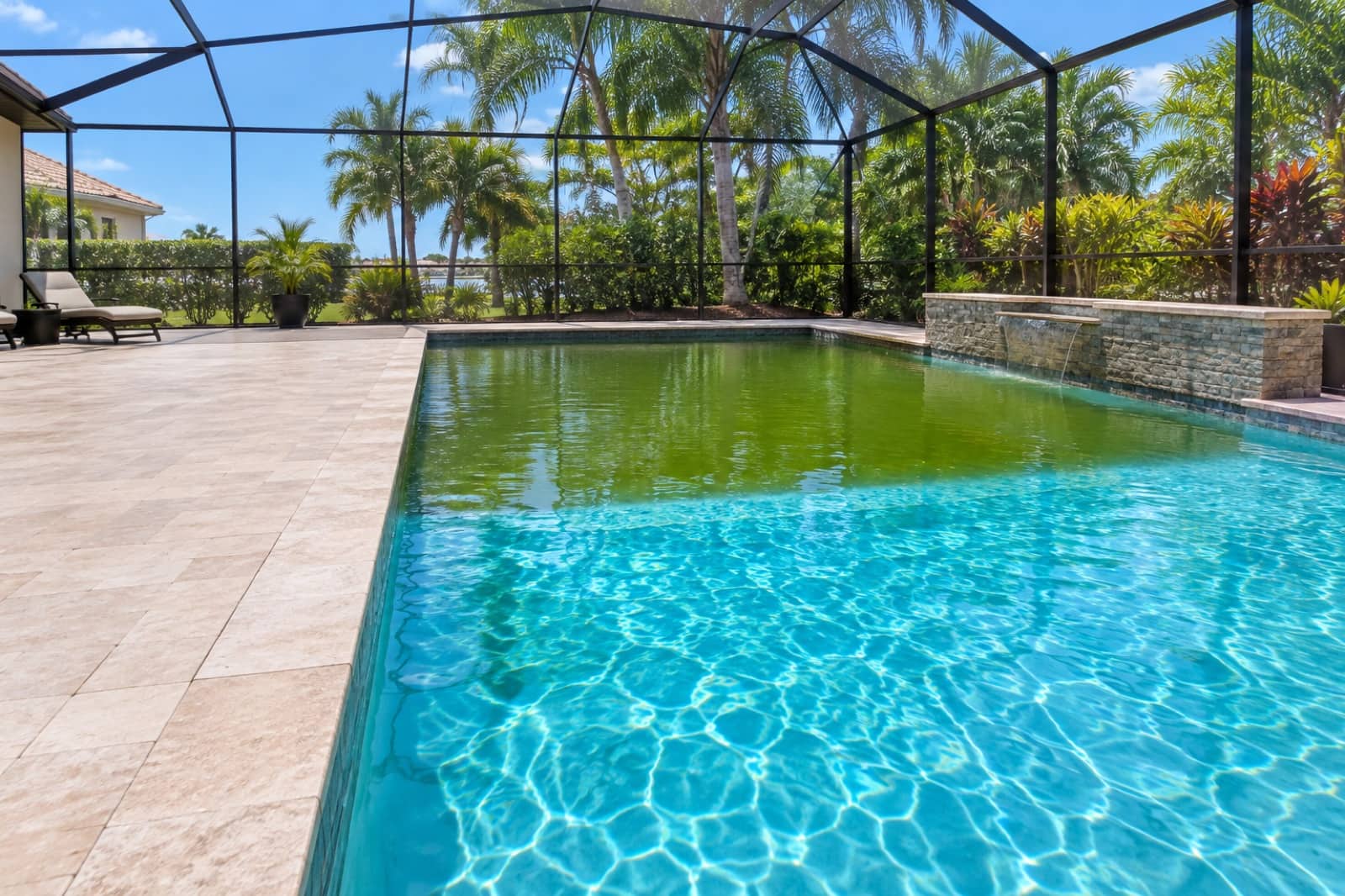
A green pool almost always means algae. Algae grows when there is not enough chlorine in the water to keep it in check, and in Southwest Florida heat, sun and summer rain that can happen in just a few days.
The good news is that most green pools can be brought back without draining. It takes testing, brushing, a strong dose of chlorine, a clean filter and a pump that runs nonstop until the water clears.
This guide walks through why it happens here, how to fix it, and how to keep it from coming back.
Why does a pool turn green so fast in Southwest Florida?
Because our weather uses up chlorine fast and feeds algae at the same time. When chlorine drops too low, algae spores that blow in with wind and rain start to grow.
A few things work against you here:
- Heat and sun. Warm water and strong sunlight burn through chlorine quickly, so a pool that was fine on Monday can be low by Thursday.
- Summer rain. Afternoon storms dilute the water and wash in dirt, leaves and lawn runoff.
- Poor circulation. A pump that runs too few hours, a clogged filter or a full skimmer basket leaves dead spots where algae settles.
- Nobody home. Snowbirds who leave for months often come back to a green pool if no one has been checking it.
Leaves and debris also feed algae. Even with a screened lanai, small debris gets through and settles on the floor.
What chlorine and pH levels should my pool have?
The CDC recommends a pH between 7.0 and 7.8 and free chlorine of at least 1 ppm. If your pool uses stabilizer (cyanuric acid), which most outdoor Florida pools do, the CDC recommends at least 2 ppm.
pH matters as much as chlorine. When pH climbs too high, chlorine works much more slowly, so you can add chlorine and still fight algae. Test both before you do anything else.
A simple test kit or strips from a pool store works for a quick check. A DPD drop kit gives a more accurate reading.
How do I fix a green pool step by step?
Clean the filter, balance the water, brush everything, shock with a strong dose of chlorine, and keep the pump running until the water clears. Here is the order that works:
- Clear the debris. Empty the skimmer and pump baskets and net out leaves from the floor.
- Clean the filter first. Backwash a sand or DE filter, or hose off a cartridge. The filter has to catch the dead algae, so it needs to start clean.
- Test and adjust pH. Bring pH into range so the chlorine can work.
- Brush walls, floor and steps. Pay extra attention to corners, steps and behind ladders where water does not move much.
- Shock the pool. Add a large dose of chlorine, following the label for your pool size. A very green pool may need more than one dose.
- Run the pump nonstop. Keep it going around the clock while the water clears.
- Clean the filter again. Dead algae clogs filters fast. A dark green pool may need several cleanings.
- Retest and rebalance. Once the water is clear, bring chlorine and pH back to normal before anyone swims.
Depending on how bad it is, it can take a couple of days for the water to fully clear. Stay out of the water until it is clear and the chlorine is back in a normal range.
Should I drain a green pool?
Usually no. Most green pools clear with chemicals, brushing and filtering, and draining brings its own risks.
In Florida the water table is high, especially in the rainy season. An empty pool can be pushed up by ground water, and an exposed plaster surface can be damaged by the sun. Draining should be a decision made with a pool professional, not a first step.
If the water is nearly black, has sat for months, or keeps going green no matter what you add, it is worth having someone look at it. That is the kind of job our green-pool rescue service handles.
What if the pool turned green right after I added shock?
Then it may be metals, not algae. If the water turns green or tinted within hours of adding chlorine, dissolved copper or iron is a common cause.
Metals can come from well water, older heaters or some algaecides. Algae usually looks cloudy and feels slimy on the walls. Metal color tends to look clear but tinted, and brushing does not change it.
Adding more chlorine will not fix a metal problem. A water test at a pool store or by a technician can tell you which one you have.
How do I keep my pool from turning green again?
Keep chlorine and pH steady every week, run the pump long enough, and brush regularly. Consistency beats big fixes.
- Test the water at least weekly, and more often in summer or after heavy rain.
- Run the pump enough hours to turn the water over every day. Summer usually needs more run time than winter.
- Empty skimmer baskets and clean the filter on a regular schedule.
- Brush walls and steps every week, even when the water looks fine.
- Add chlorine after big storms and pool parties, which both use it up.
- If you leave for the season, have someone check the pool every week while you are gone.
For many Naples and Bonita Springs homeowners, weekly pool service is the simplest way to stay ahead of it. Total Pool Services can also look at a photo of your pool and text back a free quote.
Send a photo of your pool and we will text you a free quote.
This guide is general information, not a substitute for an on-site inspection. Pool equipment, chemicals and electrical work can be dangerous. When in doubt, call a licensed pool professional.