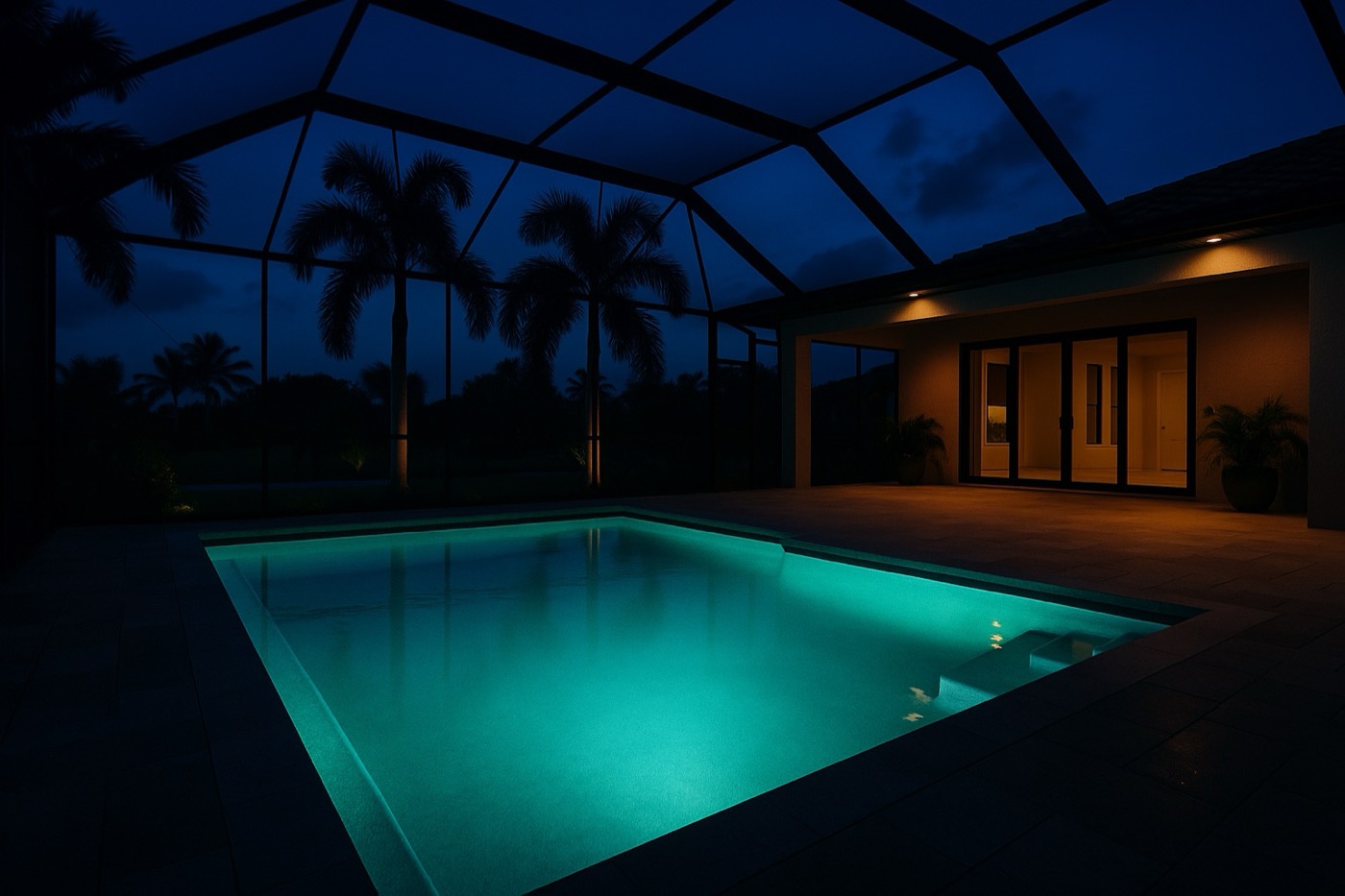


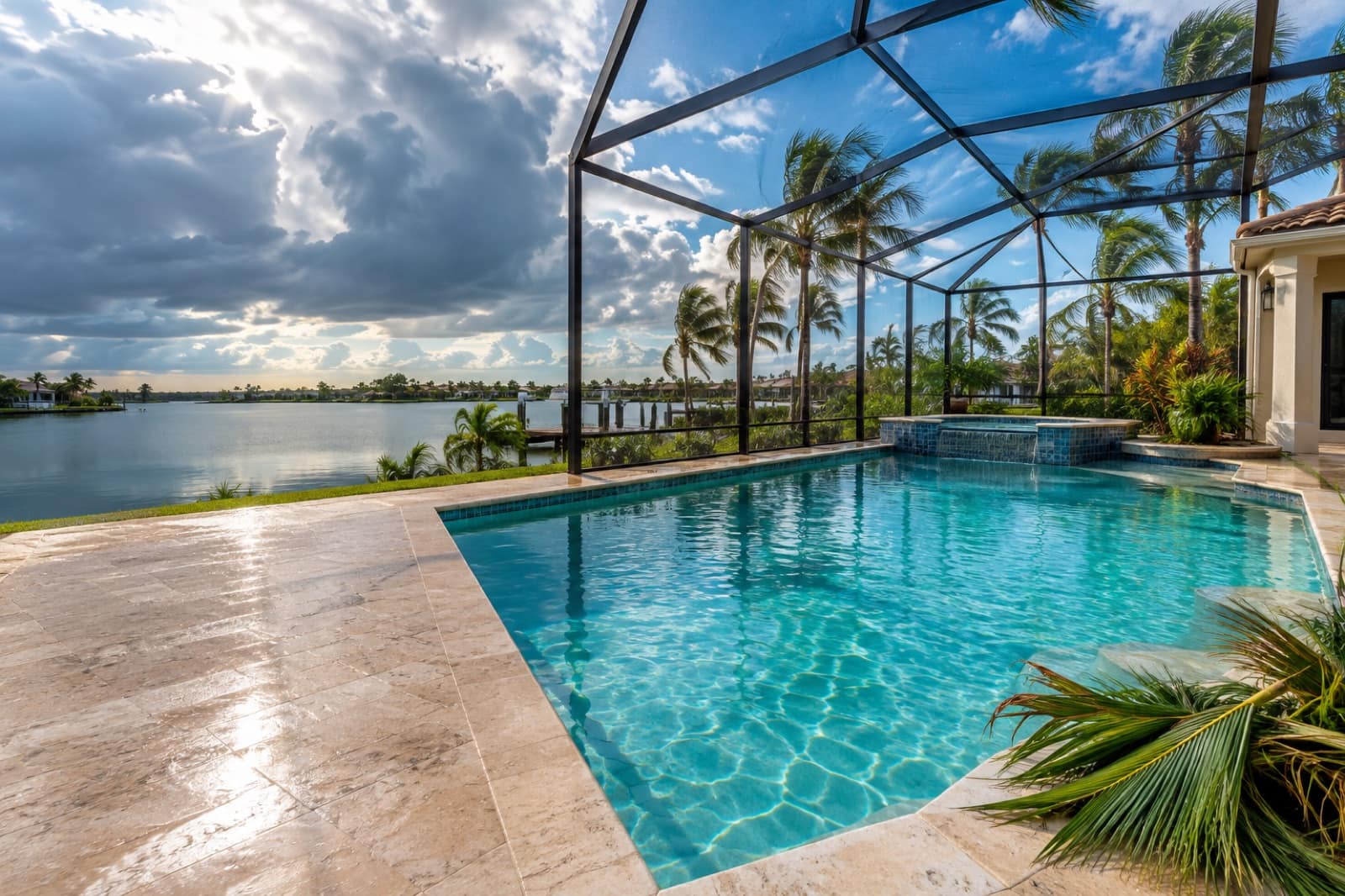
Do not drain your pool before a hurricane. Florida pool experts and UF/IFAS Extension agree that the water's weight helps hold the pool in the ground when heavy rain raises the water table. Keep it at its normal level, turn off the power, shock the water, and clear loose items.
The Atlantic hurricane season runs from June 1 to November 30, and it overlaps with our rainy season. That means months of storms that dilute the water, wash in debris and knock chemistry out of balance.
This guide covers what to do before a storm, what to do after, and how to keep the water healthy through a wet Southwest Florida summer.
Should I drain my pool before a hurricane?
No. Keep the water at its normal level. The Florida Swimming Pool Association says the weight of the water helps hold the sides and bottom of the pool in place, which matters even more when the water table rises during a storm.
UF/IFAS Extension adds that saturated ground around a partly drained pool can crack it, and that draining can also cause plumbing, electrical and deck problems. If you drain below the skimmer and the rain never comes, the pump can run dry and burn out.
Do not worry about overflow. A pool is built to hold water, and on a properly built deck the extra water drains away. Lowering the level is something to do after the storm, not before.
How do I prepare my pool for a hurricane?
Shut off the power, shock the water, and get everything loose out of the wind. Here is a simple checklist:
- Leave the water level alone. Do not drain.
- Shock the pool. Power may be out for a while, so the FSPA recommends super chlorinating before the storm.
- Turn off power at the breaker for the pump, lights and heater before the storm arrives.
- Protect the equipment. Cover exposed motors tightly with plastic, or disconnect and store them if flooding is expected.
- Bring in furniture, toys and umbrellas. Store them inside if you can.
- Do not throw furniture in the pool. UF/IFAS warns that water and chemicals damage it, and dirt on the legs can stain the finish.
- Trim branches that hang over the pool and screen cage, ahead of the season if possible.
If you leave town for the season, set this up with your pool company ahead of time so someone can prep the pool if a storm heads our way.
What should I do with my pool after a hurricane?
Stay safe first, then clear debris, check the equipment, and rebalance the water. Do not rush to turn the power back on.
- Check for hazards. Look for downed power lines and for animals in or around the pool before you start.
- Remove debris from the water soon, before leaves and dirt stain the finish.
- Inspect the equipment before turning power back on. If the pump or heater sat in flood water, have it checked first.
- Clean baskets and the filter. Storms load them up fast.
- Lower the water if it is high. Once the yard has drained, UF/IFAS suggests bringing it down to about mid-tile or halfway up the skimmer. Never leave a draining pool unattended.
- Test and shock. Rebalance the water and shock it again before anyone swims.
UF/IFAS also notes that shock does not remove fertilizers or other chemicals that wash in, and that you should not refill a pool with reclaimed water. If your yard flooded into the pool, ask a professional how to handle it.
How does rainy season affect pool chemistry?
Rain dilutes chlorine and washes in dirt, leaves and lawn runoff, so algae gets an easy start. Pools often need more attention from June through September than in the dry months.
- Chlorine drops as rain adds fresh water and debris uses up what is left.
- pH and alkalinity shift after heavy rain, which changes how well chlorine works.
- Debris and runoff bring in organic matter and nutrients that algae feeds on.
- Water level rises, which can stop skimmers from working well.
The CDC recommends keeping pH between 7.0 and 7.8 and free chlorine at 1 ppm or more, or at least 2 ppm in pools that use stabilizer. After a big storm, test and adjust instead of waiting for your next regular check.
Does a screened pool cage need special care in a storm?
Yes. Screen enclosures catch a lot of wind, and anything loose inside the cage can tear the screen or hit the frame.
Clear everything loose from inside the lanai, including furniture, planters and pool toys. Trim trees near the cage before the season starts. After the storm, check for torn panels and bent frames before you use the pool, and have damaged parts looked at by a screen contractor.
A torn screen also means more leaves and debris in the water, so plan on extra cleaning until it is fixed.
Can a pool company prep my pool if I am away?
Yes, and for snowbirds it is worth arranging before June 1. Storms can form fast, and you may not be able to get back in time.
Talk with your pool company about who will shock the pool, cut the power and secure the equipment, and who will check on it afterward. Total Pool Services offers one-time visits, openings and closings, and property-management service across Naples, Bonita Springs, Estero, Fort Myers and Marco Island. If the storm leaves the water green, our green-pool rescue service can bring it back.
Send a photo of your pool and we will text you a free quote.
This guide is general information, not a substitute for an on-site inspection. Pool equipment, chemicals and electrical work can be dangerous. When in doubt, call a licensed pool professional.