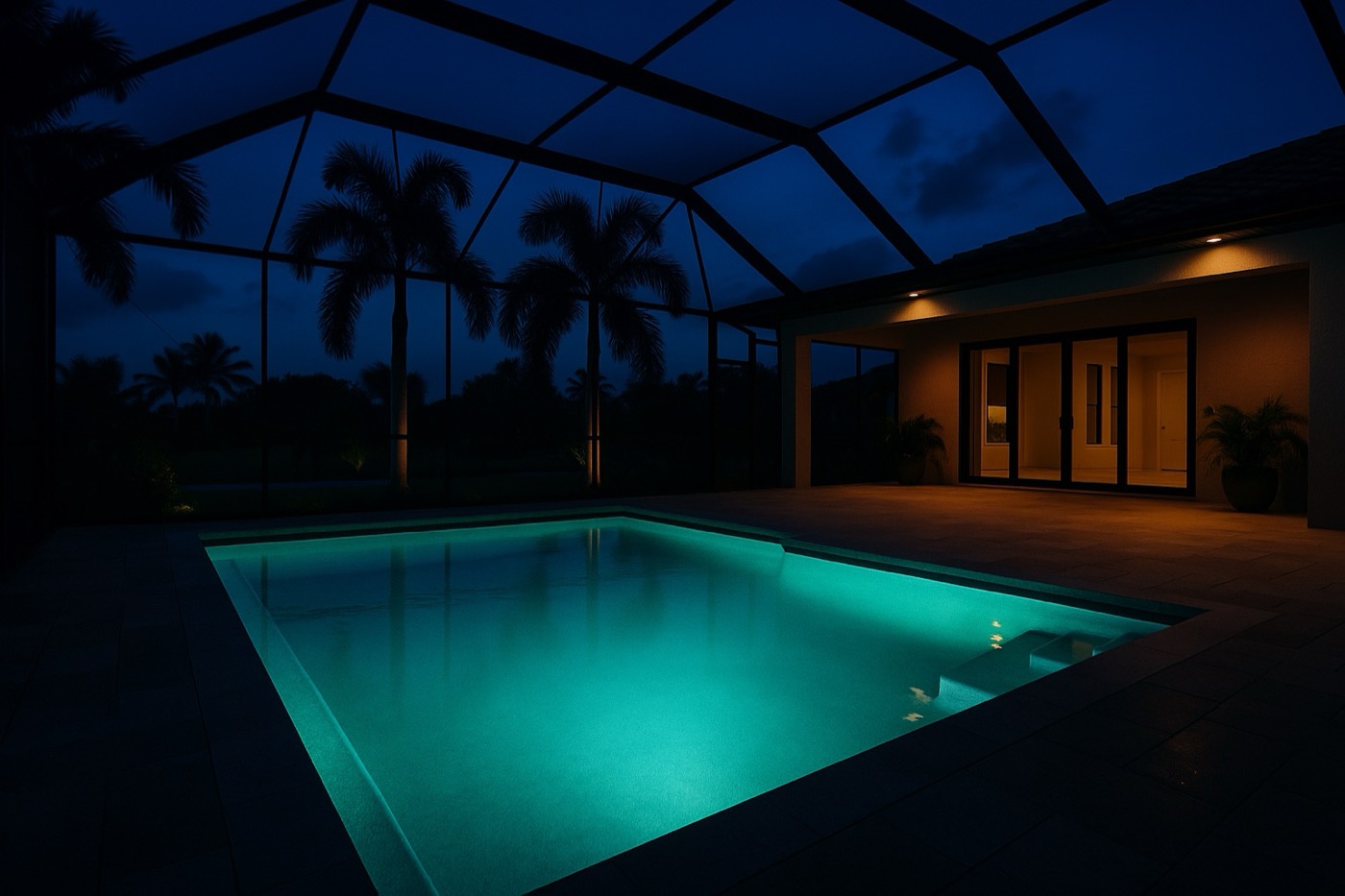


A saltwater pool is still a chlorine pool. The difference is where the chlorine comes from. A salt system makes chlorine on site from salt dissolved in the water, while a traditional pool gets chlorine added as tablets, liquid or granules.
Many owners like salt because the water feels softer and chlorine is produced every day without hauling jugs. The tradeoffs are a higher upfront cost, a salt cell that needs cleaning and eventual replacement, and salt that can be hard on some stone and metal around the pool.
This guide explains how salt systems work, the honest pros and cons, and how to care for the cell in Southwest Florida.
How does a saltwater pool system work?
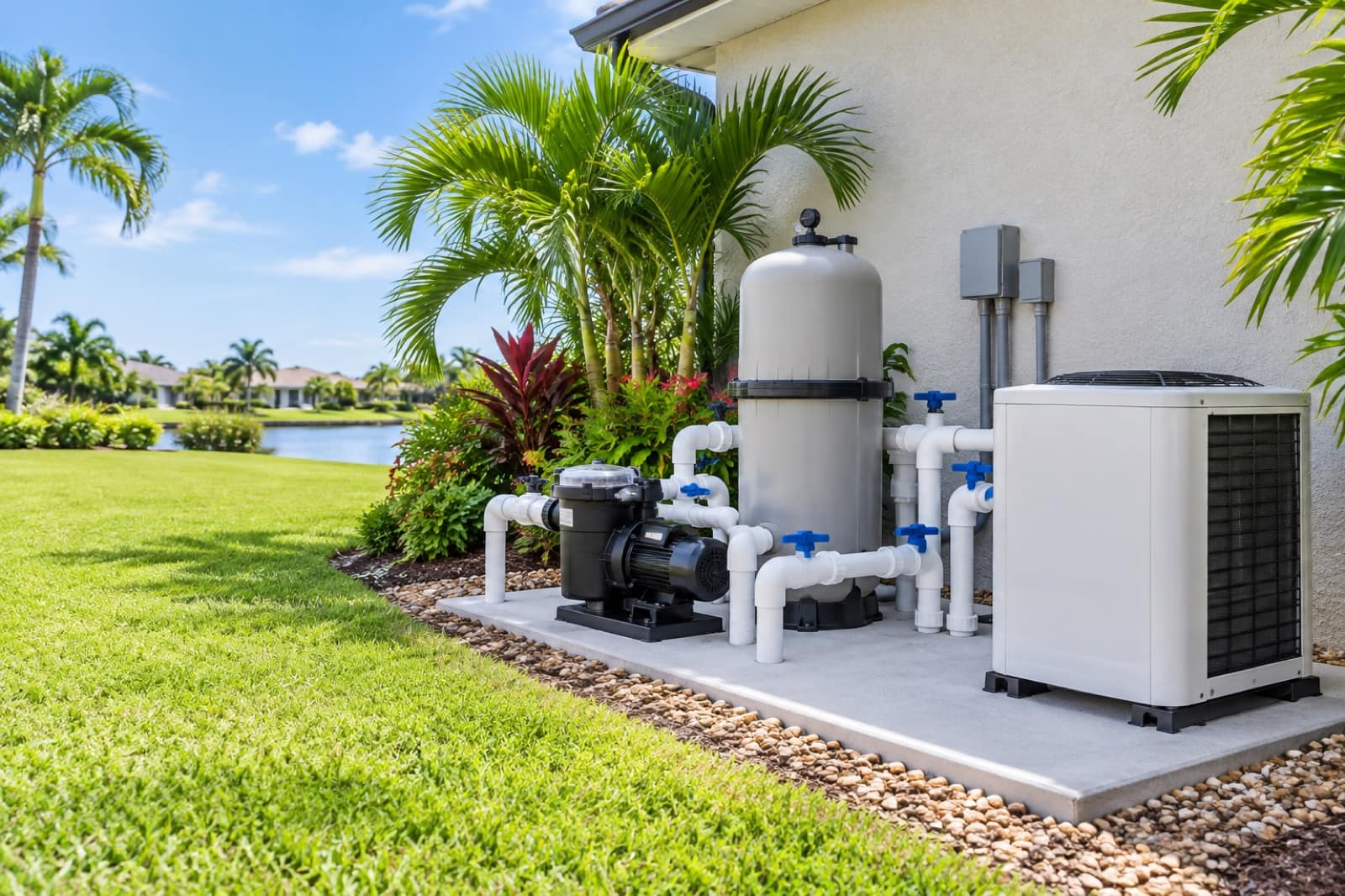
A salt chlorine generator passes a low electric current through a cell as pool water flows through it. That turns the dissolved salt into chlorine, which cleans the water just like added chlorine does.
- You add pool-grade salt to the water once, then top it up now and then.
- The salt is not used up by the cell. It is lost mainly through splash-out, backwashing and draining, and diluted by heavy rain.
- The cell only makes chlorine while water is flowing, so the pump has to run enough hours each day.
- A control box lets you raise or lower how much chlorine it produces.
The water is much less salty than the ocean. Most people barely taste it. Your system's manual lists the exact salt level it needs.
In Southwest Florida that steady output is a real help. Hot water and strong sun use up chlorine fast, and a salt system keeps making more every day the pump runs. It still needs someone watching the numbers, because the cell cannot fix high pH or low stabilizer on its own.
What are the pros of a saltwater pool?
Softer-feeling water and steady, automatic chlorine are the big ones.
- Steady chlorine every day. The cell keeps producing while the pump runs, which helps in our heat when chlorine burns off fast.
- Less chlorine to buy and store. No heavy jugs or buckets of tablets in the garage.
- Softer feel. Many swimmers say the water feels gentler on skin and eyes.
- Easy to adjust. Turn output up for summer and down for the cooler months.
What are the cons of a saltwater pool?
Higher upfront cost, cell maintenance, and the effect of salt on some materials around the pool.
- Upfront cost. You are buying a generator and a cell, and cells wear out and need replacing over time.
- Scale on the cell. Calcium builds up on the cell plates, especially when pH and calcium run high, so the cell needs regular inspection and cleaning.
- You still need to test. pH, stabilizer and salt level all need checking. A salt pool is not a no-maintenance pool.
- Stone and metal. Splashed salt water can be hard on softer natural stone and some metal fixtures, and coastal homes already deal with salt air. Ask about sealing stone decks and coping.
- Heavy rain. Big summer storms dilute the salt, so the level may need a top-up afterward.
What water levels does a salt pool need?
The same chlorine and pH targets as any pool, plus the salt level your system calls for. The CDC recommends pH between 7.0 and 7.8 and free chlorine of at least 1 ppm, or at least 2 ppm in pools that use stabilizer.
Keeping pH in check matters even more with salt. Hayward, a major maker of salt systems, says pH and calcium hardness are the two biggest factors in how fast scale forms on the cell.
Check salt with a test kit or strips from time to time rather than trusting the control box alone. A cell coated in scale can give off readings.
How do I clean and maintain a salt cell?
Inspect it about every three months, and clean it only when you see scale. Hayward suggests checking roughly every 3 months or 500 hours of run time.
- Turn off the power and the pump before removing the cell.
- Look inside. White, crusty or flaky buildup on the plates is scale. Also check for leaves or debris.
- Try a garden hose first. A strong spray often clears light deposits.
- Use a mild acid soak only if needed. Hayward recommends a 4 to 1 mix of water to muriatic acid, for example one gallon of water to one quart of acid, and a soak of about 15 minutes.
- Rinse well, reinstall, and reset the inspection reminder if your unit has one.
Always add acid to water, never water to acid, and wear gloves and eye protection. Do not clean a cell more often than it needs. Your manual is the final word for your model.
Is saltwater or chlorine better for a Southwest Florida pool?
Both work well here when the water is kept balanced. The right choice depends on your budget, your deck and coping materials, and how hands-on you want to be.
- Salt suits owners who like steady automatic chlorine and softer water, and who will keep up with cell care.
- Traditional chlorine suits owners who want the lowest upfront cost or have soft natural stone around the pool.
For snowbirds, either system needs someone checking it while you are away. A salt cell that scales up or a pump that stops means no chlorine. If your salt system shows a cell or flow warning, our equipment repair and install team can look at it, and weekly service keeps the chemistry steady either way. Total Pool Services works with both salt and traditional chlorine pools.
Send a photo of your pool and we will text you a free quote.
This guide is general information, not a substitute for an on-site inspection. Pool equipment, chemicals and electrical work can be dangerous. When in doubt, call a licensed pool professional.